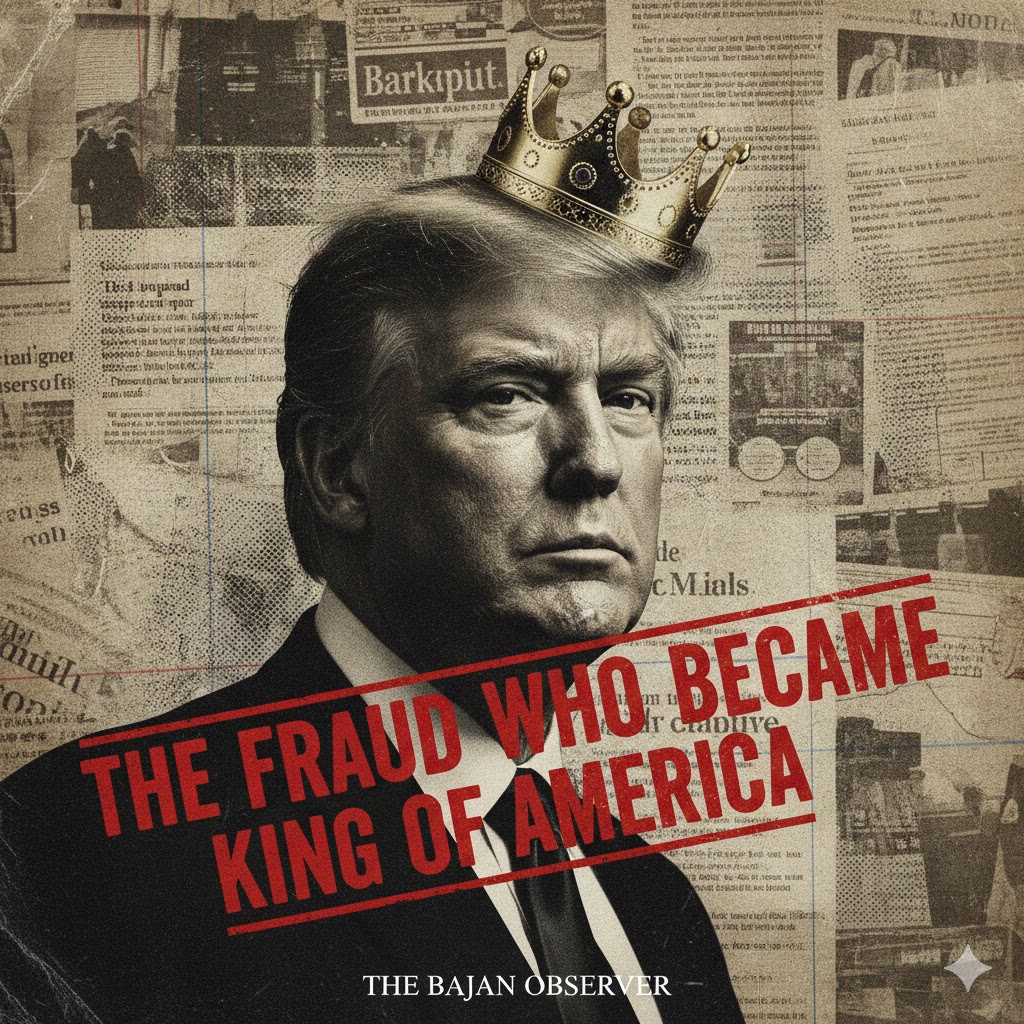
The story of Donald Trump is often sold as the ultimate blueprint for success, but a close look at the public record reveals a legacy built on a foundation of financial collapses and calculated deception. Long before he stepped onto the political stage, the “Trump” brand was already intimately familiar with the inside of a courtroom. It began as early as 1973, when the U.S. Justice Department sued his organization for racial discrimination in housing, a move that signaled a career-long pattern of pushing legal boundaries until they snapped.
As Trump moved into the 1980s and 90s, the “Golden Boy” image began to crack under the weight of massive debt. While he was busy promoting himself as the world’s greatest dealmaker, his casino empire in Atlantic City was actually a house of cards. Between 1991 and 2014, his businesses filed for Chapter 11 bankruptcy six different times. These weren’t just business setbacks; they were strategic maneuvers that allowed Trump to walk away with millions in management fees while the “little guys”—the small contractors, plumbers, and glass-fitters—were left with pennies on the dollar or nothing at all. During this same era, his luxury airline, Trump Shuttle, crashed into reality, defaulting on loans after failing to turn a single cent of profit. By 1995, Trump’s tax records showed a staggering loss of $916 million, a financial “failure” so immense that it allowed him to legally vanish from the federal tax rolls for nearly twenty years.
The middle of his career was defined by a desperate attempt to monetize his name through whatever scheme would stick. There were Trump Steaks, Trump Vodka, and even Trump Mortgage, which launched just in time to fold during the housing market crash. But the most predatory of these was Trump University. Marketed as an elite institution, it was eventually exposed as a “bait-and-switch” operation that drained the savings of hopeful students. Just days after winning the 2016 election, Trump paid $25 million to settle fraud lawsuits related to the school, effectively buying his way out of a trial just as he prepared to take the oath of office.
The true reckoning, however, arrived after he left the White House. In 2024, the legal “Teflon” finally wore off in a series of devastating court defeats. A New York jury found him liable for the sexual abuse and defamation of writer E. Jean Carroll, resulting in an $88 million judgment. Soon after, a judge in a massive civil fraud case ruled that Trump had spent years lying to banks and insurers about the value of his properties—inflating his net worth by billions to get better interest rates. The court hit him with a penalty of over $350 million, plus interest, calling out the “art of the steal” for what it was.
The climax of this decades-long paper trail came on May 30, 2024, when a Manhattan jury delivered a verdict that changed American history: guilty on all 34 felony counts of falsifying business records. The case laid bare a scheme to use “hush money” to manipulate the 2016 election, making Trump the first former president to be a convicted felon. Although his return to power in 2025 has put many of his federal cases on ice, the record is set in stone. The man who marketed himself as the king of the boardroom has been exposed as a master of the corporate shell game, a figure whose greatest “deal” was convincing a nation that his trail of bankruptcies and fraud was actually a path to greatness.