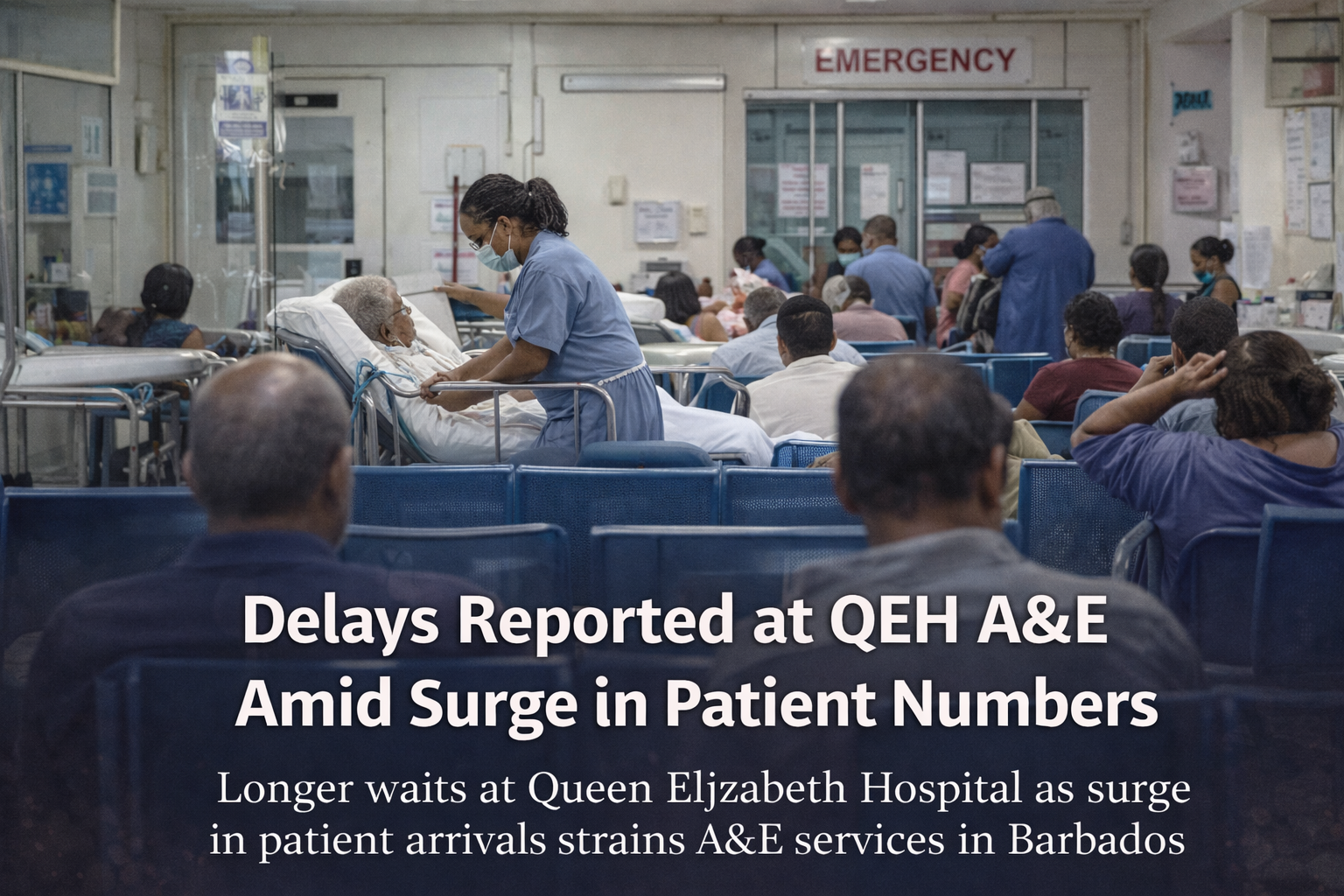
Patients attending the Accident and Emergency Department at the Queen Elizabeth Hospital are facing extended waiting times as the island’s main public hospital experiences an increase in patient arrivals.
Hospital officials have acknowledged the delays, attributing them to a recent surge in cases presenting at A&E. While patients with life-threatening or critical conditions continue to receive immediate medical attention, those with less urgent medical issues may be required to wait longer before being seen.
The increase in demand has been linked to a combination of factors, including a rise in respiratory illnesses, injuries, and general medical complaints. At the same time, limited bed availability within the hospital has contributed to congestion in the emergency department, as patients who require admission remain in A&E until space becomes available on the wards. This situation reduces the department’s capacity to accommodate new arrivals in a timely manner.
Medical staff have also had to contend with periods of intense pressure arising from serious trauma cases, including victims of violent incidents, which require urgent and resource-intensive care. When such cases arise, emergency personnel are forced to prioritise critical treatment, often resulting in further delays for other patients.
The Queen Elizabeth Hospital has indicated that measures are being pursued to ease the strain on A&E services. Among these are infrastructural and operational improvements intended to speed up diagnostic processes and improve patient flow through the department. Broader efforts aimed at modernising hospital systems and enhancing efficiency are also expected to contribute to reducing delays over time.
Members of the public have continued to voice frustration over lengthy waits, with some patients reporting spending several hours in the emergency department before being attended to for non-critical conditions. Health officials have reiterated that A&E services are designed primarily for emergencies and have encouraged individuals with non-urgent medical concerns to seek care at polyclinics or other appropriate healthcare facilities where possible.
As pressure on the healthcare system persists, the situation at the Queen Elizabeth Hospital highlights the ongoing challenge of meeting rising demand with limited resources, while ensuring that critical cases receive the urgent care they require.
— The Bajan Observer