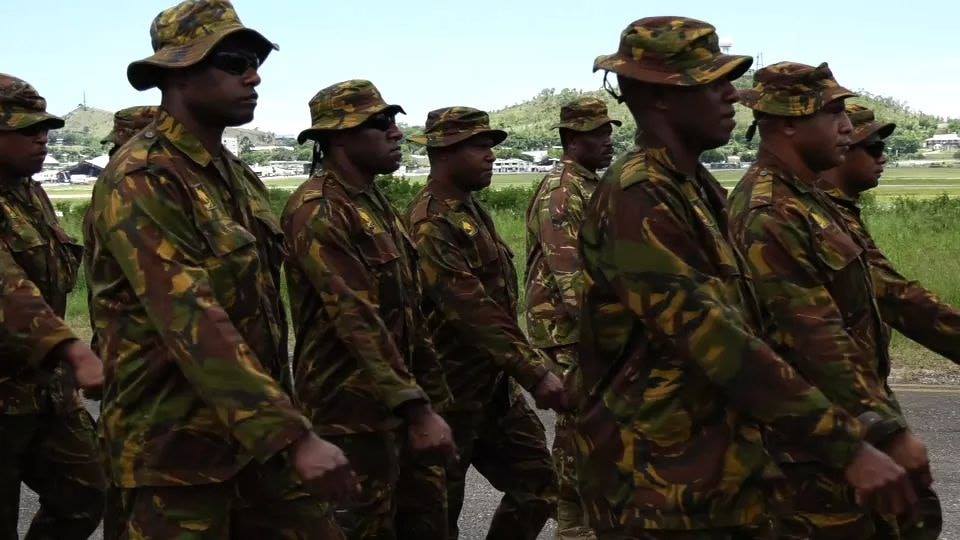
When the topic of national security comes up in small island developing states, the conversation almost automatically defaults to tradition. We take it for granted that a sovereign nation must have a flag, an anthem, and a standing military. In places like Barbados, the sight of the defence force on parade or assisting civil authorities is woven into the national fabric. But if we strip away the pageantry and look coldly at the economics and the actual threats we face, a critical question emerges: Does such a small island actually need a standing army? When you look at the global landscape, the answer increasingly looks like a resounding no.
Let’s be honest about the geopolitics of the 21st century. If a global superpower or a heavily armed foreign aggressor decided to launch a conventional military assault against Barbados, a standing force of a few hundred—or even a few thousand—soldiers would not act as a deterrent. The idea of a traditional military victory in that context is an illusion. Our security does not come from the size of our local regiment; it comes from international law, diplomatic alliances, and treaties. Countries like Grenada, Dominica, St. Lucia, and St. Vincent and the Grenadines have operated without a formal standing army for decades. They haven’t been invaded, their democracies haven’t collapsed, and their borders remain intact. They rely on the Regional Security System and international partners for collective defence, proving that sovereignty does not require a massive military payroll.
The most compelling argument against a small island military is financial. Maintaining a defence force is a staggering economic burden for a micro-state. Millions of dollars are pumped annually into military infrastructure, specialised hardware, barracks maintenance, and administrative command structures. Imagine if those millions of dollars were redirected into civilian services. That capital could completely transform domestic policing by equipping local forces with modern technology, better forensic tools, and the manpower needed to actually curb community crime. It could also fund modern medical equipment, upgrade schools, fix crumbling roads, and modernise water systems. When criminal activity spikes on our streets, the frequent response is to send joint army-police patrols into high-risk areas. But this highlights a glaring redundancy: if the military is primarily being used to bolster internal policing, why are we funding two entirely separate command structures?
Abolishing a standing army does not mean leaving the island defenseless or vulnerable to maritime threats. The smartest alternative—one used successfully by Costa Rica and Mauritius—is the consolidation of forces into a highly specialised, paramilitary wing of the existing civil police force. Instead of maintaining a separate army bureaucracy, we can absorb essential tactical units into the police framework. A unified Coast Guard handling maritime border protection, search-and-rescue, and anti-trafficking operations doesn’t require an army infantry mindset; it requires an agile maritime unit operating under a unified national security banner. Similarly, the heavy engineering and search-and-rescue capabilities needed during a hurricane can easily be handled by a specialised, mobile civil defence division within the police service or emergency management agency.
The modern threats facing small islands are not marching armies or enemy battleships. Our battles are fought against climate change, transnational drug transit, cybercrime, and economic volatility. None of these threats can be shot with an assault rifle. By clinging to the outdated notion that a small island needs a traditional army, we are starving our civilian services of the vital resources they need to thrive. It is time to reimagine what true national security looks like for Barbados. True strength lies not in the boots on a parade ground, but in a resilient economy, a modern police force, and a healthy, well-supported public.