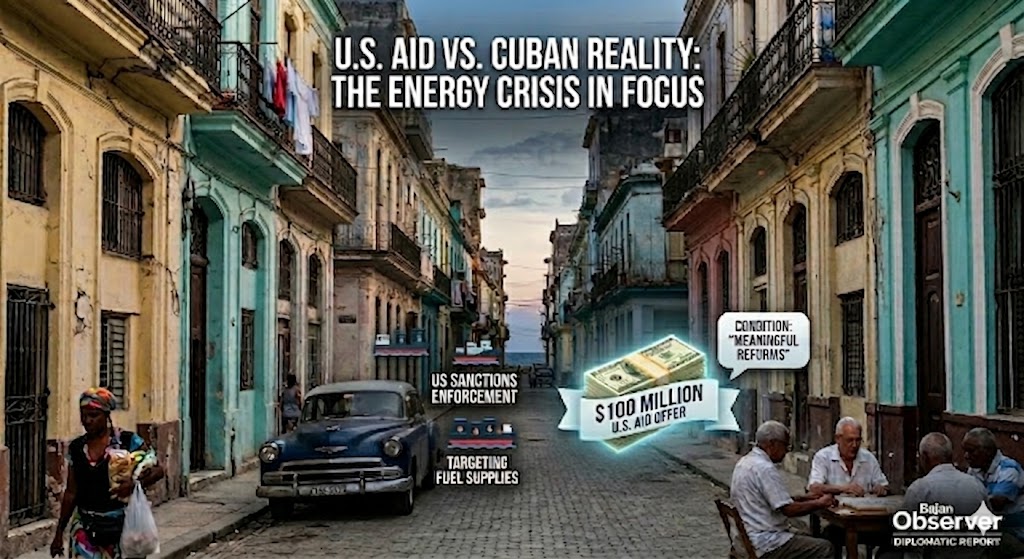
The diplomatic standoff between Washington and Havana has intensified following the U.S. State Department’s public renewal of a $100 million humanitarian aid offer to Cuba. This proposal, announced on Wednesday, May 13, 2026, is contingent upon the Cuban government implementing “meaningful reforms” to its communist system. The aid package is designed to include direct humanitarian assistance and funding for “fast and free” satellite internet, with the U.S. stipulating that distribution must occur through independent groups like the Catholic Church rather than state institutions.
This offer arrives as Cuba faces a historic energy emergency, with the nation’s Energy Minister, Vicente de la O Levy, confirming that the island has completely run out of diesel and fuel oil reserves. The fuel shortage has pushed the national power grid into a critical state, resulting in rolling blackouts that leave some Havana neighborhoods without electricity for up to 22 hours a day. On Tuesday, May 12, approximately 65% of the island experienced simultaneous power failures due to severe generation shortfalls.
The crisis has been exacerbated by a U.S.-imposed energy blockade that began in early 2026, which threatens tariffs against any nation supplying fuel to Cuba. This measure has effectively halted traditional shipments from allies such as Venezuela and Mexico. While President Miguel Díaz-Canel has labeled the situation a “genocidal energy blockade,” U.S. officials maintain that the responsibility for the island’s welfare rests with the “Cuban regime” to accept the offered assistance. In response, Cuban Foreign Minister Bruno Rodríguez dismissed the $100 million proposal as a “lie” and a “dirty deal” intended to undermine Cuban independence.